
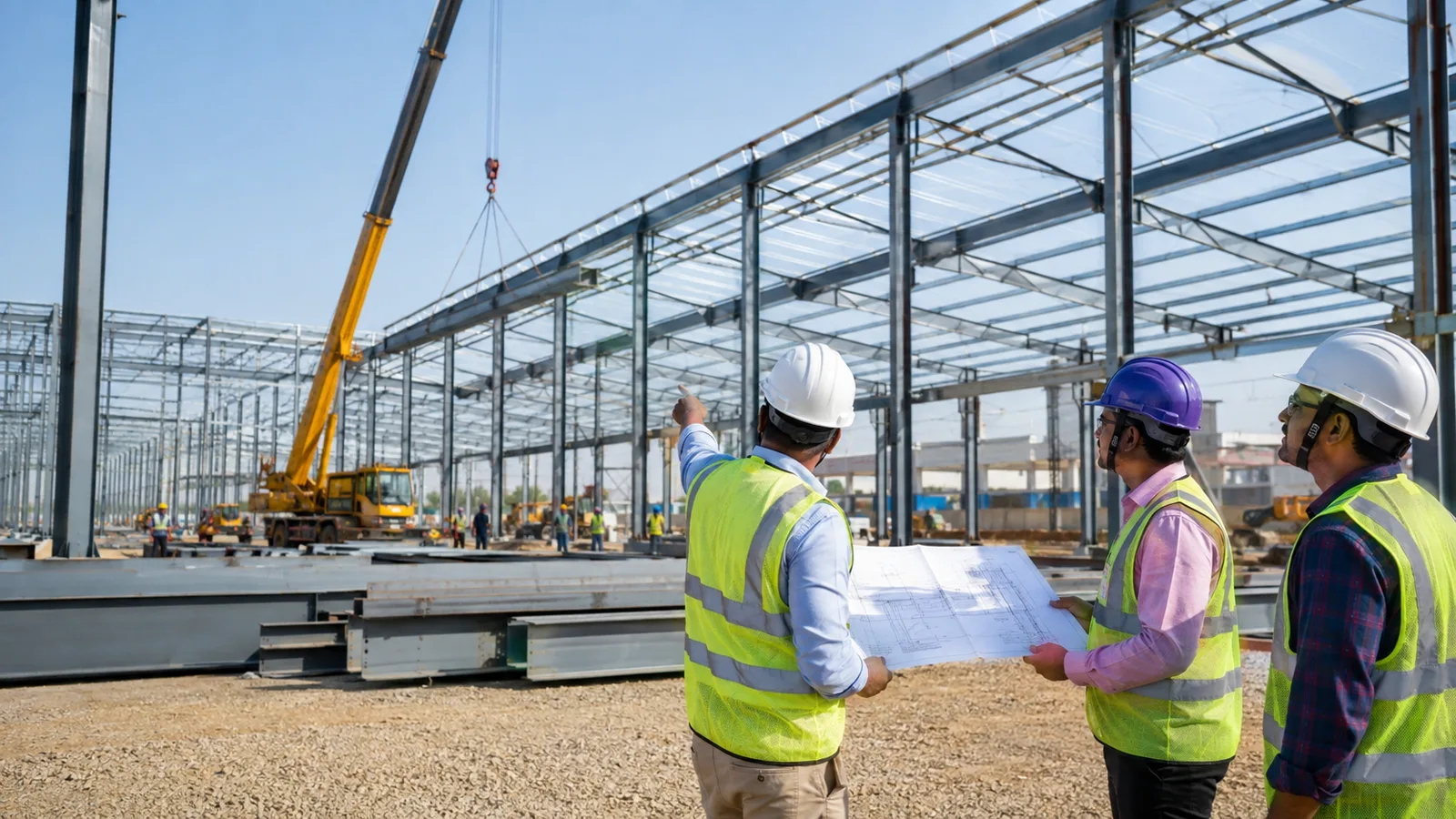
Pre-engineered buildings and structural steel reward disciplined planning. Fabrication, delivery, erection, temporary stability, crane access and follow-on envelope work must move as one coordinated sequence.
Technical execution becomes reliable when engineering intent, construction sequence and site conditions are considered together. Each discipline may be well designed on its own, but project success depends on how the interfaces work in the field.
Why this matters
The issue is important because construction activities are connected. A weakness in one part of the system can move quickly into another part of the project as lost access, late information, idle resources, rework, safety exposure or commercial uncertainty. Better control begins by making those connections visible before they become urgent.
What needs to happen in practice
The following actions create a more dependable operating condition:
- Freeze interfaces before fabrication. Interfaces are where otherwise correct packages can conflict. Coordination should identify levels, openings, loads, embedded items, service routes and responsibility boundaries before work is fixed in place. An interface register or coordinated review is valuable only when decisions are tracked through to execution.
- Plan delivery lots around erection sequence. Material planning should be tied to programme need dates, approved specifications and the actual sequence of use. Early purchase without interface clarity can create storage and revision problems, while late purchase converts a predictable requirement into an urgent site constraint. Procurement therefore needs continuous connection with engineering and execution.
- Coordinate crane and access routes. Readiness is physical as well as administrative. Teams need safe access, usable working space, lifting or handling arrangements and freedom from unresolved predecessor activities. Checking these conditions in advance prevents crews from arriving at an area that exists on the programme but is not genuinely executable.
Where projects usually lose control
The next set of controls becomes especially important once the project is moving at pace:
- Manage temporary bracing and stability. The important part is to convert this principle into an observable site control with a clear owner, a defined time for action and a way to confirm closure. Construction becomes more predictable when important expectations are made explicit rather than left to individual interpretation.
- Control bolt, weld and alignment quality. Quality needs to be verified at the stages where correction is still simple. Approved materials, first-off checks, hold points and evidence of inspection reduce the chance that a hidden or repeated defect will move downstream. The aim is prevention and consistency, not a larger snag list at the end.
- Integrate roofing, cladding and services. The important part is to convert this principle into an observable site control with a clear owner, a defined time for action and a way to confirm closure. Construction becomes more predictable when important expectations are made explicit rather than left to individual interpretation.
Why integration matters
Technical controls become effective only when they are connected to programme, procurement, site sequence and inspection. Isolated excellence in one discipline cannot compensate for unmanaged interfaces. The objective is to make engineering intent buildable, measurable and visible in day-to-day execution.
Creativve's Approach
At Creativve Constructiions, our approach is to connect planning with execution, make responsibilities visible and solve constraints before they become site problems. Reliable delivery is built through disciplined fundamentals repeated every day, supported by transparent communication and continuous learning from the work itself.