
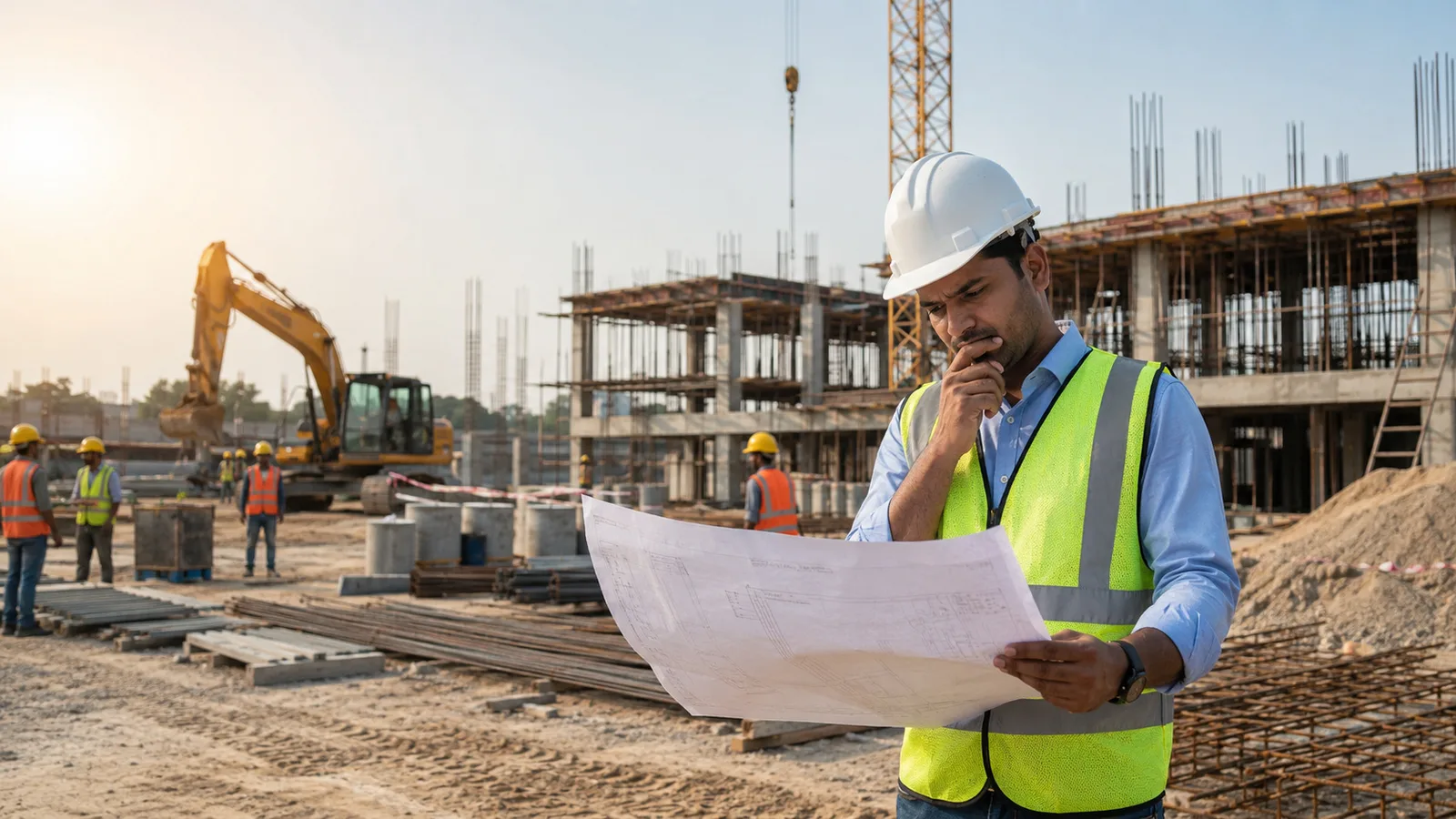
Mobilisation feels like progress because people, machinery and temporary facilities appear on site. Yet if the scope, drawings, interfaces and first workfronts are not clear, mobilisation can create cost without creating momentum.
Construction performance becomes more predictable when planning, people, information and execution are treated as one connected system.
Why this matters
The issue is important because construction activities are connected. A weakness in one part of the system can move quickly into another part of the project as lost access, late information, idle resources, rework, safety exposure or commercial uncertainty. Better control begins by making those connections visible before they become urgent.
What needs to happen in practice
The following actions create a more dependable operating condition:
- Confirm scope boundaries and package responsibilities. This requires clarity about who owns the outcome and what decisions can be taken at each level. Strong leaders do not simply escalate every difficulty. They assemble the facts, act within their authority, communicate the consequence and make sure the issue is carried through to closure.
- Identify approved drawings and pending design inputs. Information has to reach the site in the correct revision and at the time the sequence needs it. A drawing that is technically complete but issued after the workfront has moved is still a project constraint. Clear registers, priority dates and closure ownership make information flow part of production control.
- Plan first executable workfronts before manpower peaks. Readiness is physical as well as administrative. Teams need safe access, usable working space, lifting or handling arrangements and freedom from unresolved predecessor activities. Checking these conditions in advance prevents crews from arriving at an area that exists on the programme but is not genuinely executable.
Where projects usually lose control
The next set of controls becomes especially important once the project is moving at pace:
- Map interfaces with utilities, vendors and other contractors. Interfaces are where otherwise correct packages can conflict. Coordination should identify levels, openings, loads, embedded items, service routes and responsibility boundaries before work is fixed in place. An interface register or coordinated review is valuable only when decisions are tracked through to execution.
- Link mobilisation strength to actual near-term demand. The important part is to convert this principle into an observable site control with a clear owner, a defined time for action and a way to confirm closure. Construction becomes more predictable when important expectations are made explicit rather than left to individual interpretation.
- Use early-stage coordination to prevent idle resources. Resource strength should be measured through productive output, not only headcount. Manpower and equipment need ready work, competent supervision and continuity. When a constraint appears, early redeployment is more effective than allowing idle time to accumulate and attempting to recover it later through overtime.
Why integration matters
Technical controls become effective only when they are connected to programme, procurement, site sequence and inspection. Isolated excellence in one discipline cannot compensate for unmanaged interfaces. The objective is to make engineering intent buildable, measurable and visible in day-to-day execution.
Creativve's Approach
At Creativve Constructiions, our approach is to connect planning with execution, make responsibilities visible and solve constraints before they become site problems. Reliable delivery is built through disciplined fundamentals repeated every day, supported by transparent communication and continuous learning from the work itself.