
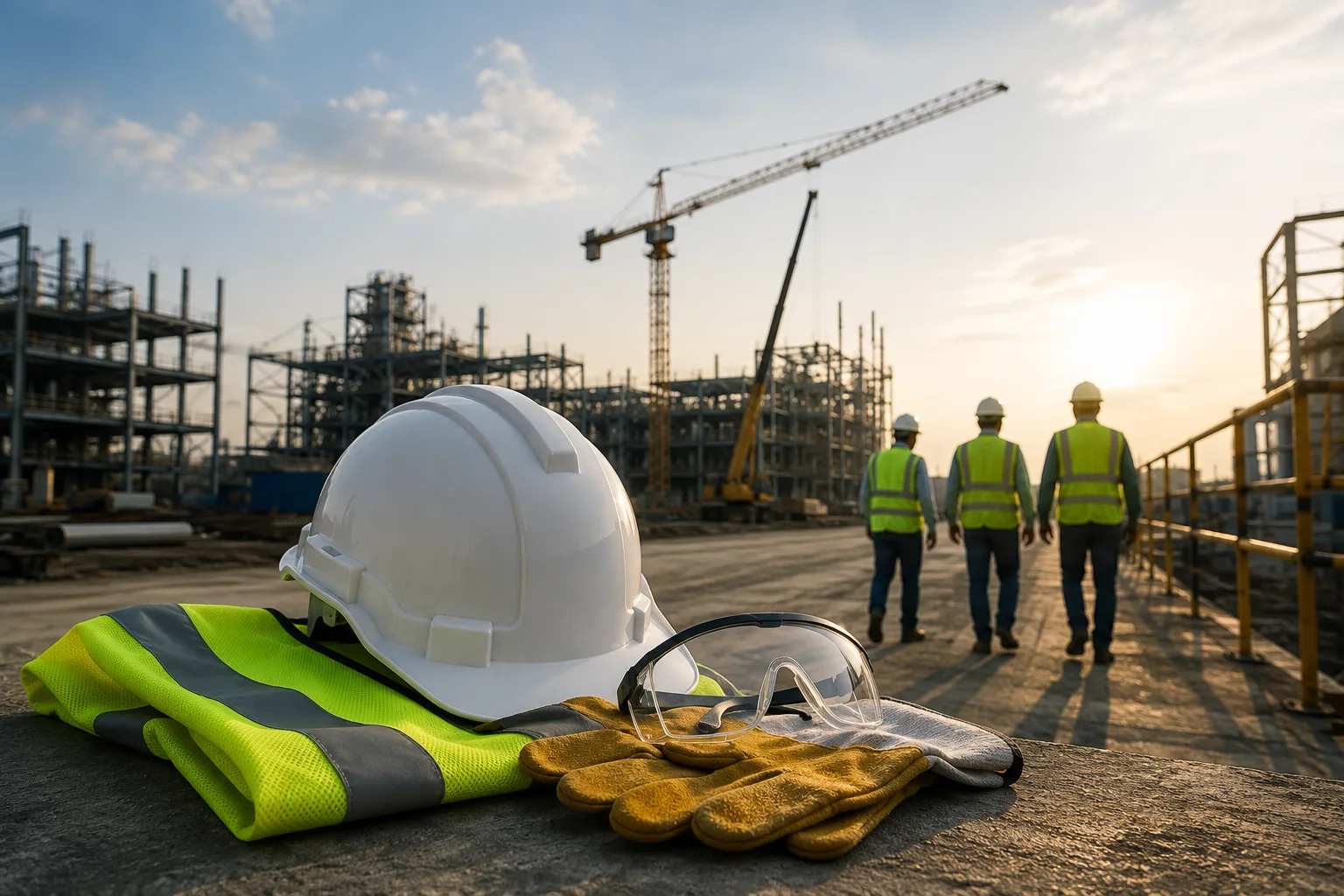
Environment, health and safety form one responsibility because construction affects people, workplaces and surroundings at the same time. A mature HSE system therefore looks beyond accident prevention to worker wellbeing, environmental controls and responsible site operations.
HSE performance improves when safety, health and environmental controls are designed into the work rather than added as a parallel compliance layer. The objective is to make the safe method the practical method.
Why this matters
The issue is important because construction activities are connected. A weakness in one part of the system can move quickly into another part of the project as lost access, late information, idle resources, rework, safety exposure or commercial uncertainty. Better control begins by making those connections visible before they become urgent.
What needs to happen in practice
The following actions create a more dependable operating condition:
- Protect people from immediate and long-term risk. Organisational culture becomes visible through repeated experiences. People notice what is recognised, how concerns are handled and whether good performance creates opportunity. Consistent attention to development and wellbeing strengthens both retention and the quality of day-to-day project behaviour.
- Control waste, dust, noise and resource use. Environmental control is most effective when it is part of ordinary site housekeeping and logistics. Waste routes, storage, dust suppression, spill prevention and water management should be planned with the same practical attention as access and material movement.
- Maintain emergency preparedness. The control is strongest when it is designed into the method and sequence before the task starts. Risk assessment, permits, competent supervision and task-specific communication should make the safe way of working clear and practical. This protects people without turning HSE into a parallel process disconnected from production.
Where projects usually lose control
The next set of controls becomes especially important once the project is moving at pace:
- Train and communicate continuously. Clients gain confidence when information is timely, factual and useful for decisions. Good communication should make constraints visible early, distinguish facts from assumptions and explain the action being taken. Trust is strengthened most when difficult information is handled professionally rather than delayed.
- Review performance and improve systems. The important part is to convert this principle into an observable site control with a clear owner, a defined time for action and a way to confirm closure. Construction becomes more predictable when important expectations are made explicit rather than left to individual interpretation.
- Make HSE part of leadership accountability. This requires clarity about who owns the outcome and what decisions can be taken at each level. Strong leaders do not simply escalate every difficulty. They assemble the facts, act within their authority, communicate the consequence and make sure the issue is carried through to closure.
From compliance to operating habit
The goal is not to create more paperwork. It is to make risk controls part of normal production thinking so teams can work safely without treating safety as a competing priority. When the work method and the safe method are the same method, compliance becomes easier to sustain.
Creativve's Approach
Creativve's Approach is to make HSE part of the execution system. We want teams to see safety, health and environmental responsibility in the plan, the method, the workfront and the daily decisions that follow.