
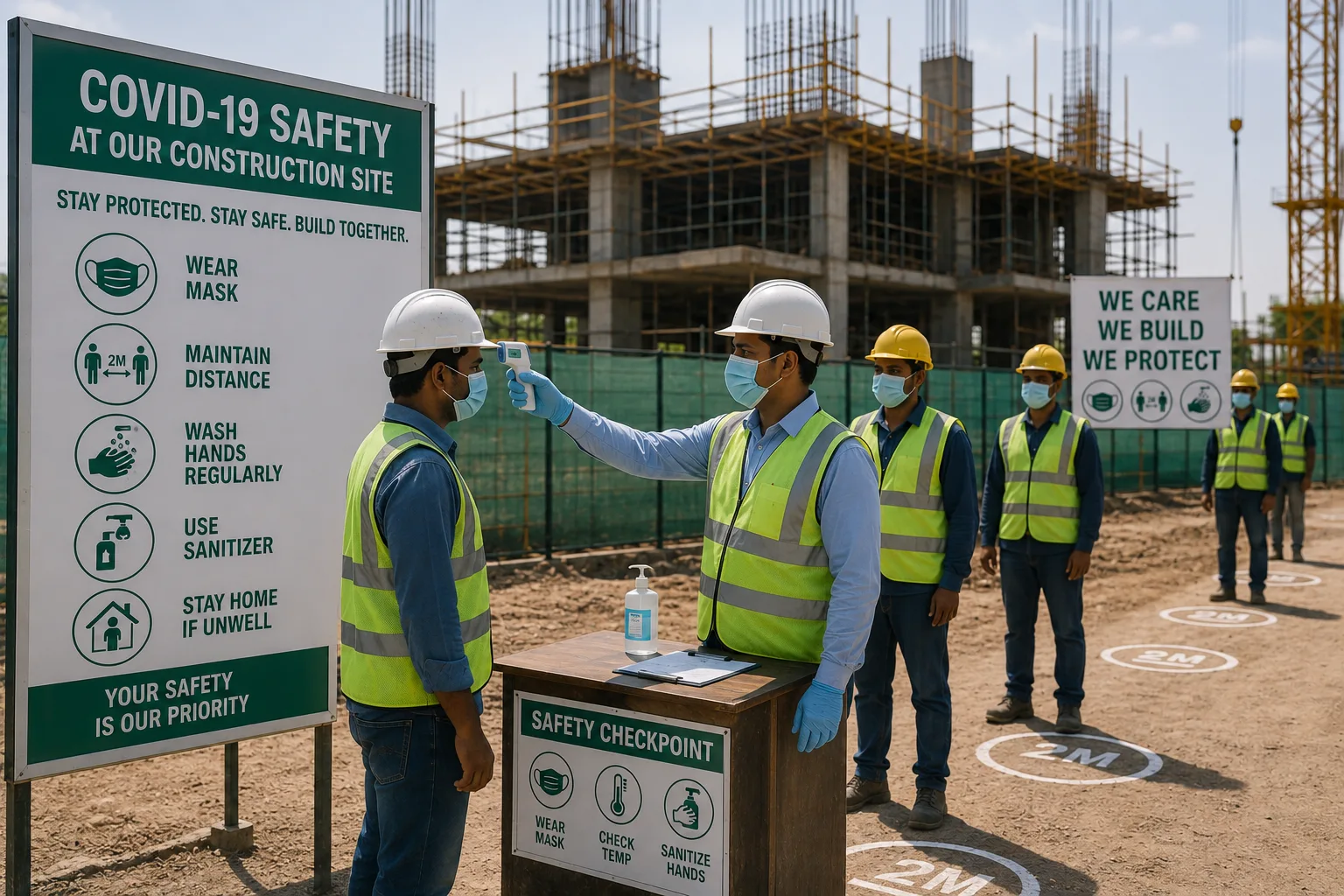
The pandemic forced construction organisations to rethink transport, entry controls, distancing, hygiene, suspected cases and workforce continuity. Although the immediate emergency has passed, the experience remains a useful case study in rapid site-risk management.
Some project lessons remain valuable even after the original event has passed. Archive knowledge helps organisations retain the operating lessons learned under unusual conditions.
Why this matters
The issue is important because construction activities are connected. A weakness in one part of the system can move quickly into another part of the project as lost access, late information, idle resources, rework, safety exposure or commercial uncertainty. Better control begins by making those connections visible before they become urgent.
What needs to happen in practice
The following actions create a more dependable operating condition:
- Controlled transport and arrival. The important part is to convert this principle into an observable site control with a clear owner, a defined time for action and a way to confirm closure. Construction becomes more predictable when important expectations are made explicit rather than left to individual interpretation.
- Workplace hygiene and distancing measures. The important part is to convert this principle into an observable site control with a clear owner, a defined time for action and a way to confirm closure. Construction becomes more predictable when important expectations are made explicit rather than left to individual interpretation.
- Screening and suspected-case response. The important part is to convert this principle into an observable site control with a clear owner, a defined time for action and a way to confirm closure. Construction becomes more predictable when important expectations are made explicit rather than left to individual interpretation.
Where projects usually lose control
The next set of controls becomes especially important once the project is moving at pace:
- Isolation and medical escalation. The control is strongest when it is designed into the method and sequence before the task starts. Risk assessment, permits, competent supervision and task-specific communication should make the safe way of working clear and practical. This protects people without turning HSE into a parallel process disconnected from production.
- Communication with workers and families. Clients gain confidence when information is timely, factual and useful for decisions. Good communication should make constraints visible early, distinguish facts from assumptions and explain the action being taken. Trust is strengthened most when difficult information is handled professionally rather than delayed.
- Business continuity under health restrictions. The control is strongest when it is designed into the method and sequence before the task starts. Risk assessment, permits, competent supervision and task-specific communication should make the safe way of working clear and practical. This protects people without turning HSE into a parallel process disconnected from production.
From compliance to operating habit
The goal is not to create more paperwork. It is to make risk controls part of normal production thinking so teams can work safely without treating safety as a competing priority. When the work method and the safe method are the same method, compliance becomes easier to sustain.
Creativve's Approach
Creativve's Approach is to make HSE part of the execution system. We want teams to see safety, health and environmental responsibility in the plan, the method, the workfront and the daily decisions that follow.