
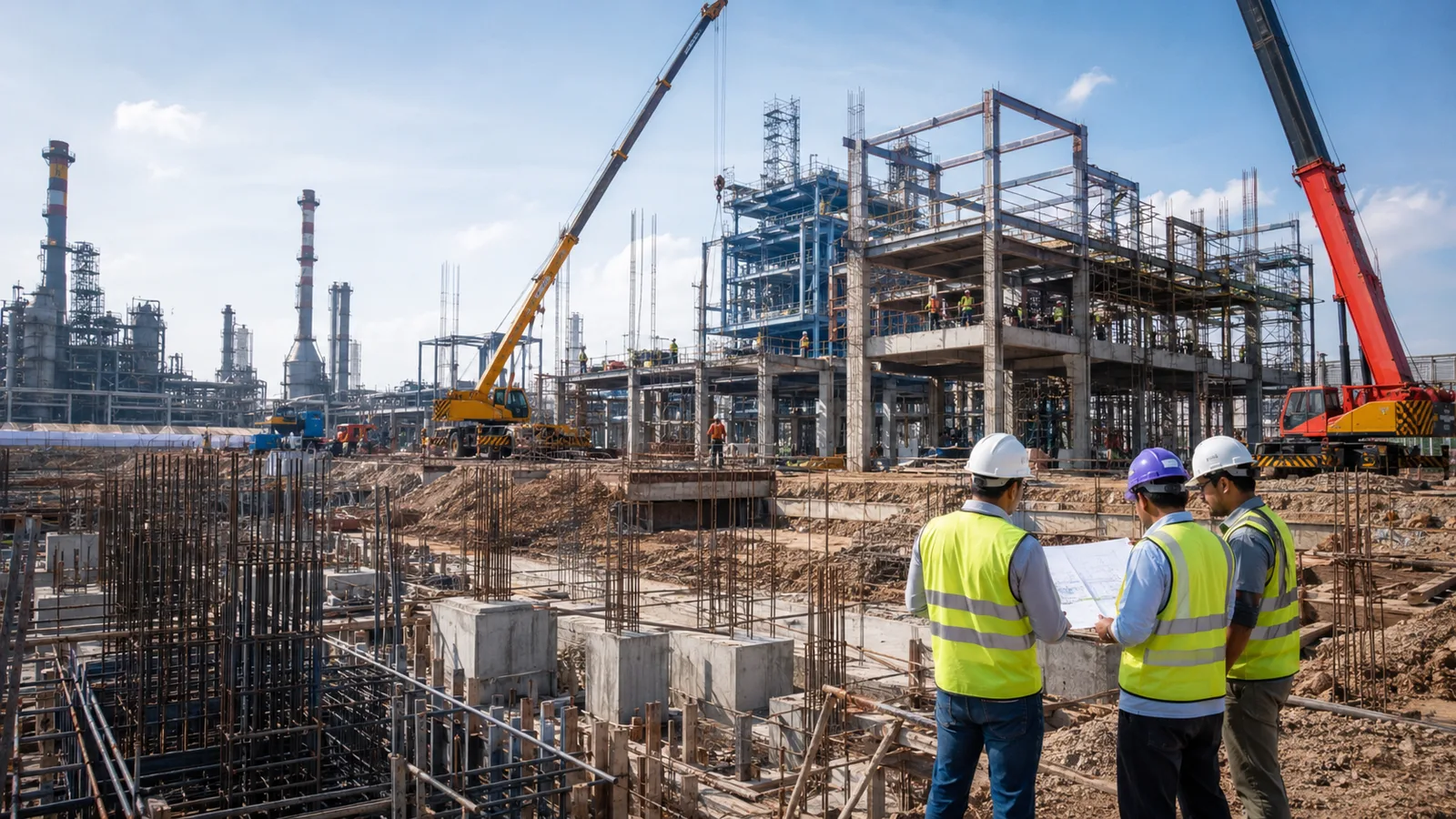
For a construction organisation, progress is meaningful only when it is achieved responsibly. Safety is not a support function to execution. It is one of the conditions that makes good execution possible.
At Creativve Constructiions, we believe organisational capability is built through the standards leaders choose to protect consistently. Growth, safety, people development and project performance are connected responsibilities, not separate conversations.
Why this matters
The issue is important because construction activities are connected. A weakness in one part of the system can move quickly into another part of the project as lost access, late information, idle resources, rework, safety exposure or commercial uncertainty. Better control begins by making those connections visible before they become urgent.
What needs to happen in practice
The following actions create a more dependable operating condition:
- Leadership must make safety visible in daily decisions. The control is strongest when it is designed into the method and sequence before the task starts. Risk assessment, permits, competent supervision and task-specific communication should make the safe way of working clear and practical. This protects people without turning HSE into a parallel process disconnected from production.
- Planning should remove risk before work begins. The important part is to convert this principle into an observable site control with a clear owner, a defined time for action and a way to confirm closure. Construction becomes more predictable when important expectations are made explicit rather than left to individual interpretation.
- Workers need the confidence to raise unsafe conditions. The control is strongest when it is designed into the method and sequence before the task starts. Risk assessment, permits, competent supervision and task-specific communication should make the safe way of working clear and practical. This protects people without turning HSE into a parallel process disconnected from production.
Where projects usually lose control
The next set of controls becomes especially important once the project is moving at pace:
- Health and environmental responsibility belong inside project delivery. Environmental control is most effective when it is part of ordinary site housekeeping and logistics. Waste routes, storage, dust suppression, spill prevention and water management should be planned with the same practical attention as access and material movement.
- Performance pressure must never normalise shortcuts. The important part is to convert this principle into an observable site control with a clear owner, a defined time for action and a way to confirm closure. Construction becomes more predictable when important expectations are made explicit rather than left to individual interpretation.
The leadership implication
Systems create the framework, but leaders determine whether the framework is used consistently. Teams watch what receives attention when deadlines tighten. Leadership is therefore visible in everyday trade-offs: whether difficult information is surfaced, whether standards remain intact and whether people are trusted to take responsibility with accountability.
Creativve's Approach
For Creativve Constructiions, the standard we set for ourselves is simple: growth must strengthen the organisation, not weaken the disciplines that created trust in the first place.