
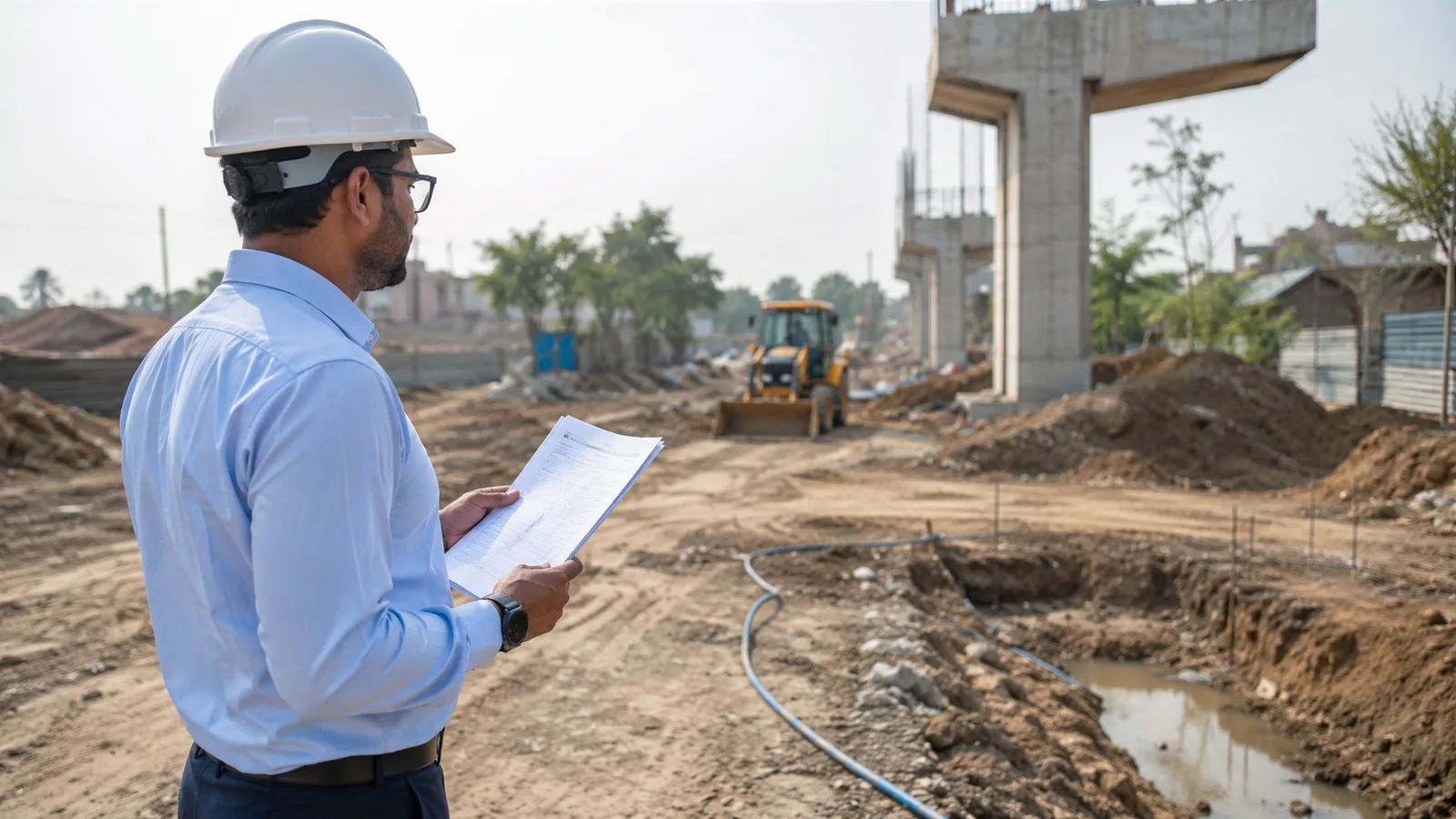
Instruction is not readiness. A workfront exists only when the people assigned to it can work safely, continuously and to the correct information.
This is one of the recurring realities of construction management: site performance is often determined by conditions created before the activity starts. The visible event on site is only the last link in a longer chain of planning, information and coordination.
The reality on site
Construction realities are rarely dramatic when they begin. They usually start as a small missing input, a decision that can wait, an area assumed to be ready or a responsibility that has not been made explicit. The cost appears later, when manpower is already committed and the sequence has fewer alternatives.
What good teams do differently
The practical controls are simple, but they require consistency:
- Approved information. Information has to reach the site in the correct revision and at the time the sequence needs it. A drawing that is technically complete but issued after the workfront has moved is still a project constraint. Clear registers, priority dates and closure ownership make information flow part of production control.
- Physical access. Readiness is physical as well as administrative. Teams need safe access, usable working space, lifting or handling arrangements and freedom from unresolved predecessor activities. Checking these conditions in advance prevents crews from arriving at an area that exists on the programme but is not genuinely executable.
- Materials and tools. Material planning should be tied to programme need dates, approved specifications and the actual sequence of use. Early purchase without interface clarity can create storage and revision problems, while late purchase converts a predictable requirement into an urgent site constraint. Procurement therefore needs continuous connection with engineering and execution.
- Predecessor completion. Sequence converts individual activities into a project. Dependencies, access, approvals and resource movement need to be understood before short-term pressure forces teams into out-of-sequence work. A useful programme therefore remains connected to look-ahead planning and daily site decisions.
- Safety readiness. The control is strongest when it is designed into the method and sequence before the task starts. Risk assessment, permits, competent supervision and task-specific communication should make the safe way of working clear and practical. This protects people without turning HSE into a parallel process disconnected from production.
Why it matters
The management lesson is to follow the cause upstream. Waiting, congestion, rework and lost productivity are often symptoms of an earlier planning or coordination gap. Fixing only the visible symptom can make the site busy without making the project healthier.
Creativve's Approach
At Creativve Constructiions, we treat this reality as an execution principle. The objective is to remove avoidable uncertainty before it reaches the workfront and to keep planning connected to what teams can actually build.